

Every Sunday morning for close to ten years, my cleaning routine started the same annoying way: five minutes of hunting. Glass cleaner under the kitchen sink, the toilet brush wedged behind the guest bathroom door, a half-empty bottle of all-purpose spray somewhere in the laundry room I could never quite remember leaving. By the time I actually started scrubbing anything, I'd already walked the length of my house three times and my patience was already shot before I'd wiped down a single counter.
I live in a single-story house outside Fort Worth with my husband Danny and our two kids, and between muddy cleats, a shedding golden retriever named Biscuit, and a household that dirties dishes faster than I can wash them, cleaning day was never optional. Three months ago I picked up the JiatuA cleaning caddy after my dollar-store tote finally split down one side, and it's been the one part of my Sunday routine I haven't had to think twice about since.
The Quick Verdict
A sturdy $16 plastic caddy that carried my full lineup of cleaning supplies through 12 straight weeks of Sunday cleaning without cracking, though the handle picks up a slight wobble by month two.
Amazon Check Today's Price →Tired of hauling bottles room to room one at a time?
This is the caddy I've used every single Sunday for three months. Check today's price and see if it's still in stock at that range.
Amazon Check Today's Price on Amazon →How I've Used It
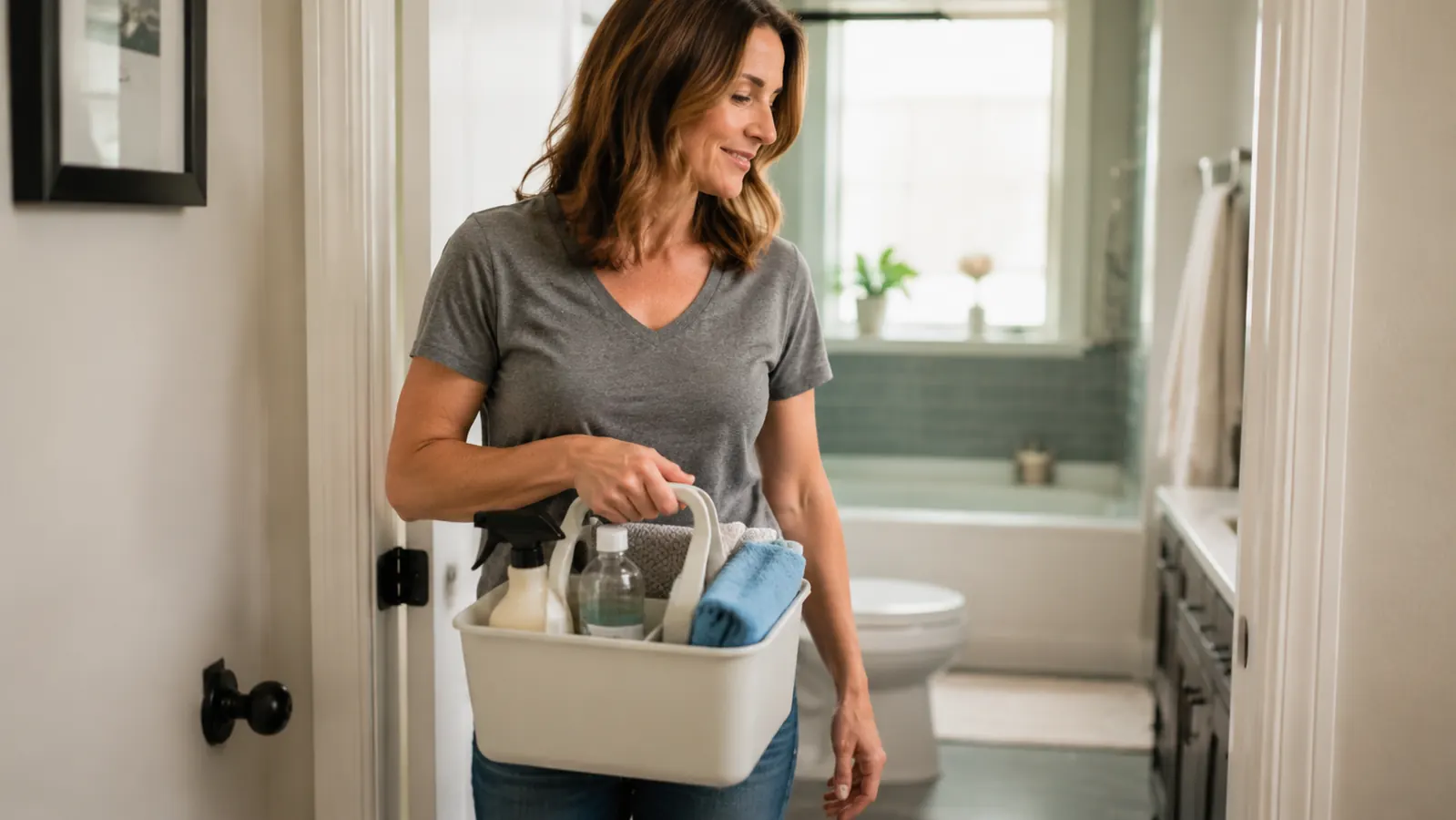
The first Sunday, I loaded it heavy on purpose, because I wanted to know right away if this thing was going to hold up or if I'd wasted sixteen dollars. In went a bottle of all-purpose spray, a bottle of glass cleaner, a scrub brush, a roll of paper towels turned on its side, a small tub of disinfecting wipes, and three folded microfiber cloths. That's close to seven pounds of gear by my kitchen scale, and I carried it by the center handle from the kitchen to both bathrooms and back without a single bottle sliding out.
That became the routine, unchanged, for twelve weeks. I load it once at the kitchen counter, and I don't set it down again until the whole downstairs is done, which usually takes me about ninety minutes on a normal week and closer to three hours around the holidays when guests are coming. I never had to make two trips for a forgotten bottle, which honestly was the entire reason I bought this in the first place.
By week four or five, loading the caddy stopped being a decision. I'd grab it off the shelf in the laundry room, fill the same six slots in the same order without thinking, and be out the door of the first bathroom before I'd have finished hunting for supplies under the old system.
I started keeping a little notebook page taped inside my pantry door, just tally marks for each Sunday, mostly to see if I'd actually stick with the new system or fall back into old habits after the novelty wore off. Twelve weeks in, I hadn't missed a single Sunday, and more than half the time I finished my full downstairs cleaning route in under one hundred minutes, something that used to reliably run past two hours when I was still making separate trips for forgotten supplies.
The Handle Held Up Longer Than I Expected
I'll be honest, I didn't expect the handle to survive three months of being loaded and unloaded roughly fifty times. It's molded plastic, not a separate metal piece, and those are usually the first thing to snap on a cheap caddy. Mine hasn't cracked, chipped, or split at the seam where it meets the bucket.
What did happen, starting around week eight, is a small amount of give when the caddy is fully loaded and I'm carrying it with one hand while opening a door with the other. It's not a crack, it's more of a flex, the same kind of give you'd feel in a well-used laundry basket handle. It hasn't gotten worse in the four weeks since, and it's never actually failed on me, but I noticed it enough to mention it here because a lot of reviews gloss right over the small stuff.
For comparison, the plastic tote I used before this one had a rigid handle that never flexed at all, right up until the day it cracked clean through while I was carrying it out to the garage. I'll take a little flex over a sudden break.
I also tested the handle deliberately once, around week ten, by loading it as heavy as I could reasonably justify, four full bottles, the wipes tub, and a hand towel, then carrying it the length of my house and back twice in a row. The flex showed up right away under that load, but it settled back to its normal shape within a few seconds of setting the caddy down, which told me this is cosmetic give in the plastic rather than early failure. It's held that same amount of flex, no more, every week since.
What Actually Fits Inside
The caddy has one deep main compartment and a shallower center section built around the handle base, which is where I keep my sponges and a small scrub brush so they don't slide around near the spray bottles. Tall bottles like a full-size Windex or a 32-ounce all-purpose spray fit upright with room to spare, which surprised me because a lot of the smaller caddies I looked at before buying this one couldn't clear a standard spray bottle without the trigger catching on the rim.
Where it gets tight is if I try to add a fourth bottle plus the wipes tub plus a rag. At that point things start leaning on each other, and if I take a turn too fast into the hallway, the lightest bottle, usually the glass cleaner, tips over. It hasn't spilled yet because the caps stay on, but I've caught it mid-tip more than once carrying it one-handed while also holding a laundry basket.
It's not built for a mop, a bucket refill, or anything bulky. This is strictly a bottles-and-cloths caddy, and for my weekly routine that's exactly the size I needed. If your cleaning day involves hauling a full mop bucket too, you'll still be making that trip separately.
I measured the main compartment out of curiosity around week six, mostly because my daughter asked if her school water bottle would fit for a road trip, and it comes in at roughly eleven inches long by seven inches wide, deep enough that a 24-ounce spray bottle sits with an inch or two of clearance below the rim. It's a good size for my six-item rotation, but I wouldn't plan on squeezing in a seventh bottle without something tipping.

Three Bathrooms, One Trip
My house has two full bathrooms plus a half bath off the kitchen, and before this caddy, cleaning all three meant restocking my hands with supplies at least twice. Now I load once at the kitchen counter, hit the half bath first, then both full bathrooms, then swing back through the kitchen and the two bedrooms the kids are responsible for keeping tidy, and I'm not setting the caddy down between rooms except to actually clean.
That single change, not walking back to the kitchen four separate times, is what cut roughly twenty minutes off my Sunday routine over the twelve weeks I tracked it. I didn't clean faster room to room. I just stopped losing time in the hallway.
Where the Plastic Started to Show Wear
Around week nine, I noticed the bottom of the caddy had a faint ring of hard water residue where a leaky spray bottle cap had been sitting. It wiped off with the same all-purpose spray I already had in the caddy, no scrubbing needed, but it's a reminder that this is a light plastic, not a heavy-duty industrial bucket. If you're rougher on your gear than I am, or if you're setting it down on rough concrete or gravel regularly, I'd expect scuffing on the bottom edges faster than I saw it.
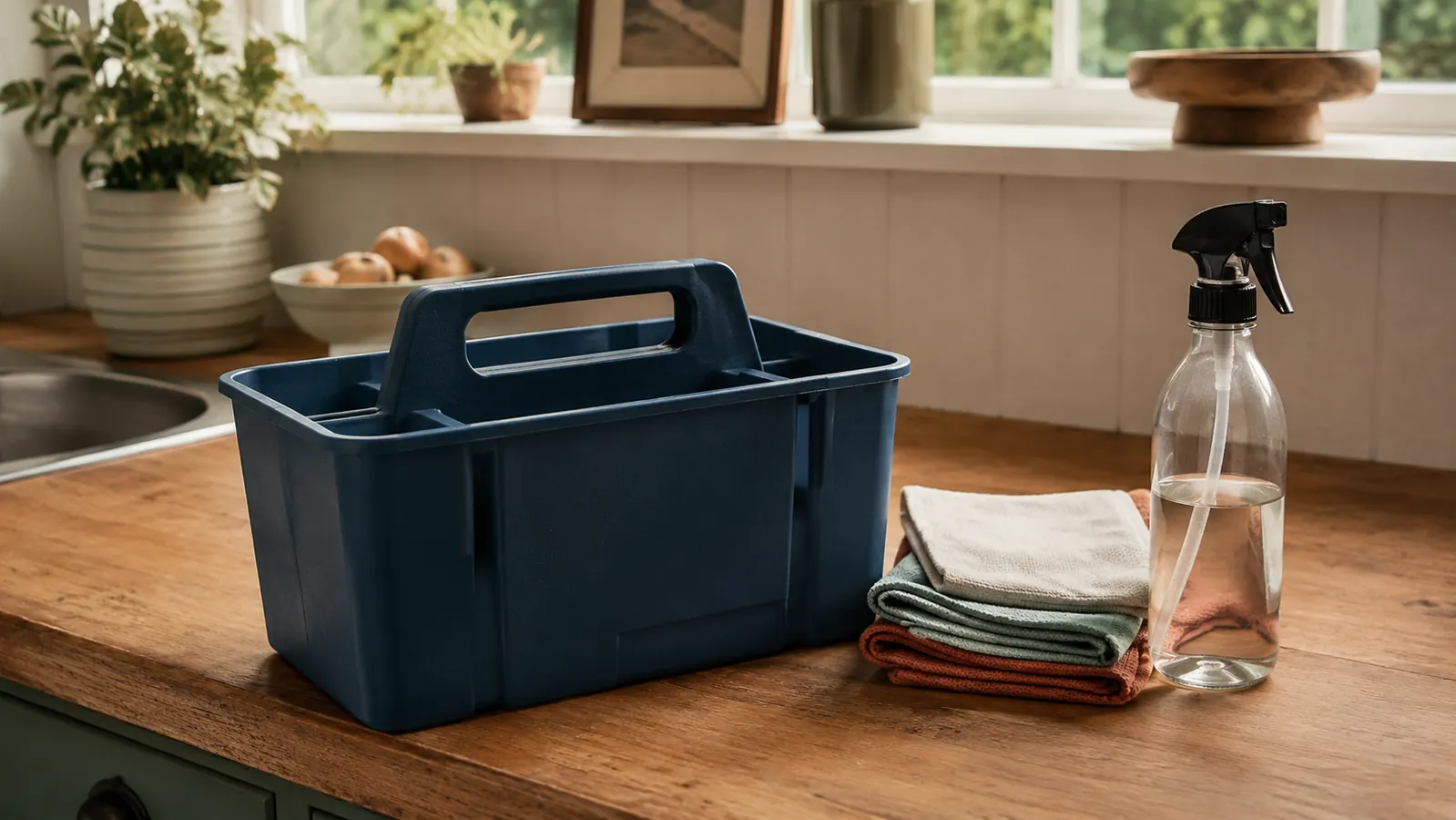
The blue color has held its shade well under my kitchen lights and doesn't show grime as easily as a white caddy would, which matters more than I expected. My old white tote looked dingy within a month. This one still looks close to new after three months of weekly loading.
One thing I do differently now, learned the hard way in week five, is I always wipe the caddy out with a dry rag before I put it away instead of setting it down wet from a leaky bottle and forgetting about it until the next Sunday. That habit alone seems to be why mine still looks presentable while a neighbor's identical caddy, which she uses for her weekly rental turnover cleaning, has visible water spotting after roughly the same amount of use.
Comparing It to What I Used Before
Before the JiatuA caddy, I cycled through a dollar-store plastic tote, a repurposed laundry basket, and briefly, a canvas tote bag that soaked through the bottom the first time a bottle leaked. Each one solved part of the problem and created a new one. The tote cracked at the handle within six weeks. The laundry basket had no way to keep spray bottles upright, so everything shifted and clanged with every step. The canvas bag was fine until it wasn't, and by then I'd already ruined the bag.
This is the first one that's made it past the two-month mark without a failure I'd call disqualifying. The handle flex is a real observation, not a dealbreaker, and at under sixteen dollars, it's cheap enough that even if it only lasts a year of weekly use, I'm not out much.
I also borrowed my sister Renae's heavier-duty metal caddy for one Sunday around week seven, just to see if I was missing out on something sturdier. It was noticeably harder to carry loaded, the metal edges dug into my palm after about twenty minutes, and it weighed enough empty that I noticed the difference immediately when I picked it up next to the JiatuA. For a once-a-week routine carried mostly by hand, I'd rather have the lighter plastic, even with its small tradeoffs, than a heavier build I dread picking up.
What I Liked
- Carries a full week's worth of supplies without a second trip
- Handle hasn't cracked after 12 weeks of weekly loading and unloading
- Deep enough for full-size spray bottles like Windex or Fantastik to stand upright
- Blue plastic hides grime and hard water spots far better than my old white tote
- Under $16, cheap enough to replace without much guilt if it does eventually wear out
Where It Falls Short
- Handle develops a slight flex under a full load starting around week 8
- No dividers, so lightweight bottles can tip over if you turn a corner fast
- Too small for a mop, a bucket refill, or anything bulkier than bottles and cloths
- Bottom edges show wear faster on rough surfaces like concrete or a garage floor
By week four, loading the caddy wasn't a decision anymore. It was just Sunday.
Who This Is For
If your cleaning supplies are currently scattered across two or three rooms and you're tired of walking back to the kitchen mid-clean, this solves that specific problem well. It's a good fit for a house with two or three bathrooms, a weekly or biweekly cleaning routine, and a preference for spray-and-wipe supplies over bulky mop buckets. Renters and smaller households will like that it's lightweight enough to carry one-handed while holding a laundry basket in the other.
Who Should Skip It
If you clean commercially or manage a larger property with a full mop-and-bucket system every visit, this caddy is going to feel undersized fast, it's simply not built to double as bucket storage. Anyone who wants rigid dividers to keep every bottle locked in place should also look elsewhere, since this design relies on a snug fit rather than actual compartments, and a light or half-empty bottle can shift during a fast turn.
Ready to stop making three trips to clean one bathroom?
After three months of weekly use, this is still the caddy sitting under my kitchen sink. See today's price on Amazon before it changes.
Amazon Check Today's Price on Amazon →