

For about four years, our hallway linen closet in Round Rock looked like a losing game of Tetris. I'd pull out what I thought was a queen fitted sheet at ten at night, mid sheet change, and end up holding a twin flat sheet from my son's old bunk bed instead, one my daughter had long since outgrown and I'd somehow never gotten rid of. The matching pillowcases were never with the set. They'd migrated to a separate pile because pillowcases fold flatter and somehow always end up shoved wherever there's a gap on the shelf. I'd stand there in the hallway at ten at night, arms full of mismatched cotton, and just start pulling everything off the shelf until I found what I actually needed, usually waking up my husband in the process because the closet door squeaks.
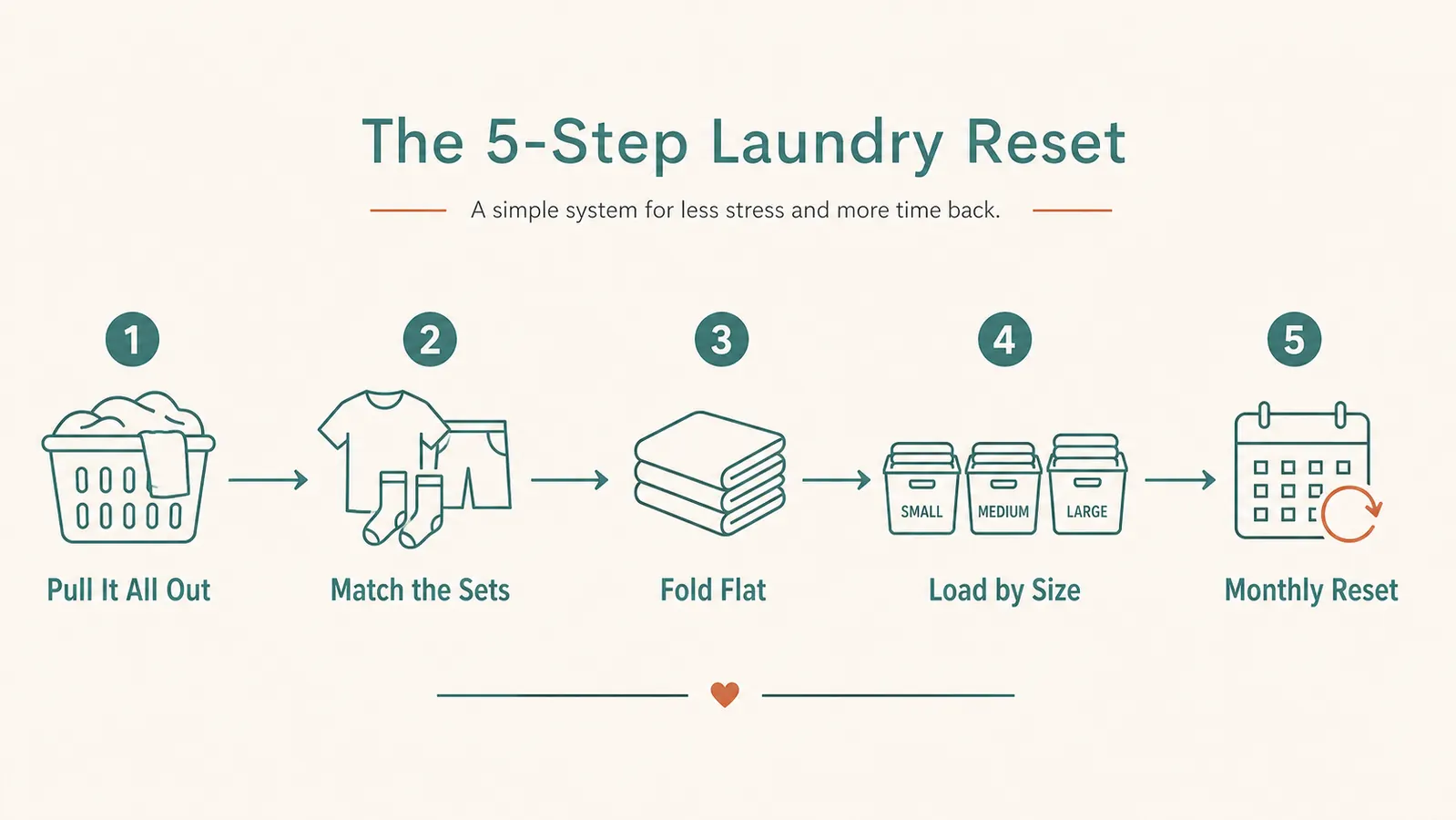
The closet wasn't small. That was never the problem. The problem was that I had six sheet sets in four different sizes, no system for keeping a set together, and zero way to tell what was inside a folded stack without unfolding it first. Every stack looked identical from the outside, so I ended up unfolding two or three wrong ones before I found the right size, then trying to refold them well enough that the pile didn't look like it had been through a windstorm. Below is the exact five-step system I built to fix that, plus what changed once I started using individual SpaceAid fabric organizers instead of just stacking loose folded sheets on the shelf like I had for years. This isn't a theory I read on Pinterest. I've run this system every laundry day since last fall, and it's the reason I can grab a matching queen set in under fifteen seconds now instead of standing in the hallway sorting through a pile at bedtime.
Stop unfolding three stacks to find one matching sheet set
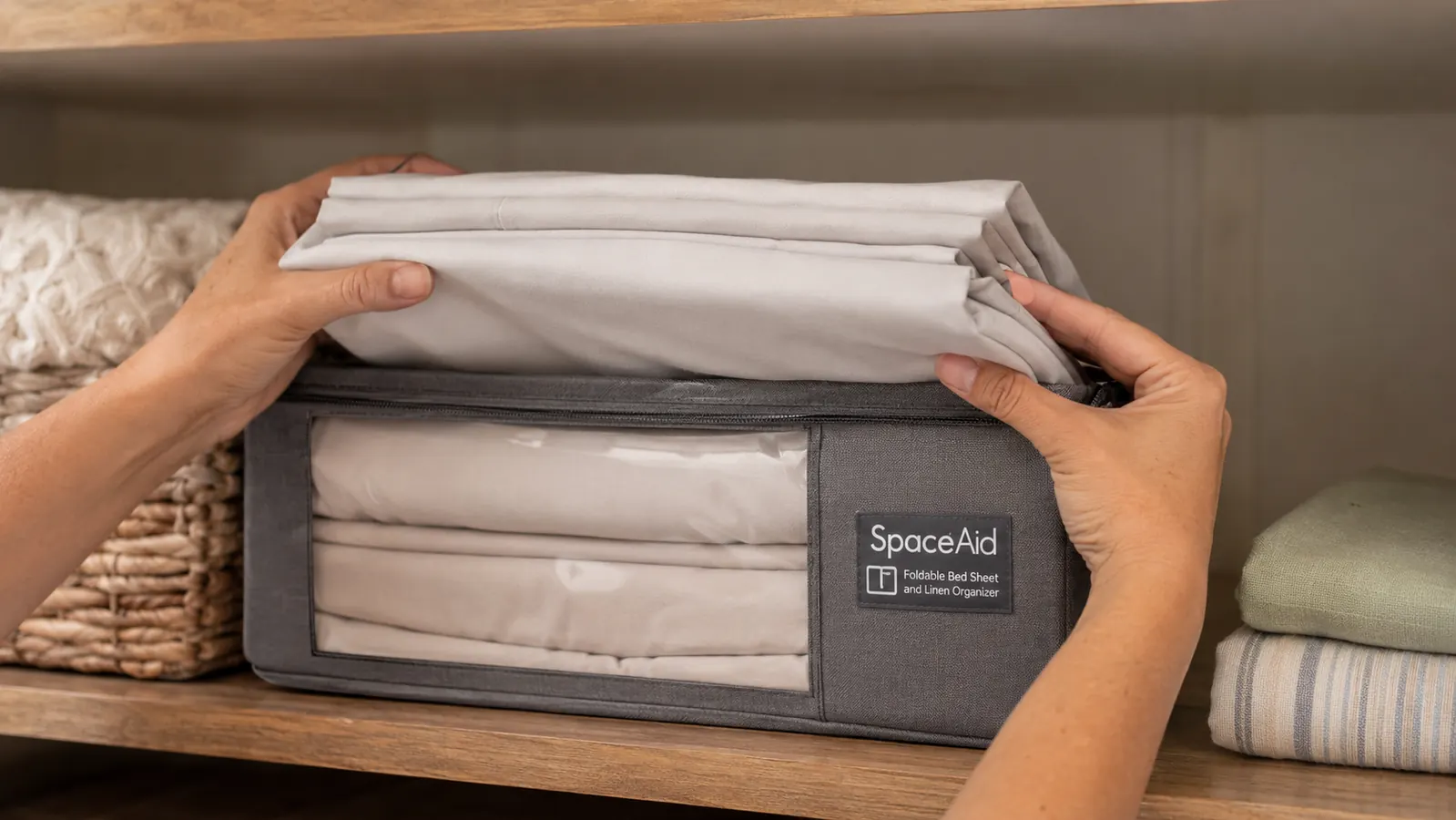
I switched to a set of SpaceAid fabric organizers with a clear window on the front, so I can see exactly which set is inside without pulling anything out. Check today's price and see if a four-pack covers your closet.
Amazon Check Today's Price on Amazon →Step 1: Pull every sheet out of the closet
This step is not optional and it is not fun. Every fitted sheet, flat sheet, pillowcase, and mystery folded rectangle needs to come off the shelf and land somewhere you can see it, whether that's your bed, the floor, or the guest room. I piled mine on our bed one Saturday morning, and what I found was honestly a little embarrassing. I owned three full sets that no longer matched any mattress in the house, two lone fitted sheets with no partner flat sheet anywhere in the pile, and a set of flannel sheets from a Christmas years ago that I'd genuinely forgotten we owned until they turned up under a stack of pillowcases.
Do this when you have a solid thirty minutes and nobody's about to jump on the bed you just used as a staging area. I made that mistake once when my youngest decided the sheet pile looked exactly like a ball pit and dove straight into the middle of it before I'd even started sorting. Spread everything flat enough that you can read the care tags, not stacked in a way that hides half the pile. If a sheet has been in a bag in the back of the closet for more than a couple years, this is also the moment to notice it and decide if it's actually still in rotation or if it's just taking up space you could use for something you reach for weekly.
Take a quick photo of the full pile before you start sorting. It sounds like a strange step for bed sheets, but seeing the actual volume laid out is what made me commit to getting rid of things instead of just refolding the same mess and sliding it back onto the shelf, which is exactly what I'd done the two previous times I tried to tackle this closet. That photo is still on my phone, and I pull it up whenever I'm tempted to let the pile creep back up over the winter.
Step 2: Match sets and let go of the orphans
Go through the pile and physically pair every fitted sheet with its flat sheet and pillowcases. This is where most of the chaos gets exposed. I found four fitted sheets with no matching flat sheet in sight, and two flat sheets that belonged to sets I could no longer identify because the fitted sheet had apparently worn out and been thrown away months earlier without me noticing the flat sheet was still hanging around, folded up like it still had a job to do. Orphaned pieces like these rarely get used. They just take up folded space that a real, complete set could be using instead.
I kept the orphans that were still in good shape as backup flat sheets for painting drop cloths or pet crate liners, and the rest went into a donation bag for our church's linen drive. My rule now is simple: if a piece doesn't have its full set within reach, it doesn't earn a spot on the shelf. That one rule cut my total sheet count from around fourteen loose pieces down to five complete sets, which made an enormous difference in how much space I actually needed and how fast I could find anything.
While you're matching, this is also the natural moment to sort by mattress size. I keep a mental note of which bedroom uses which size, since our house has a mix of twin, full, queen, and king, and mixing those up at eleven at night is its own special kind of frustrating, especially when you're half asleep and the fitted sheet just will not stretch over the corner no matter how hard you tug it. Group your matched sets by size right here on the bed before you fold a single thing.
Step 3: Fold each set as one flat unit
This is the step that actually changes how your closet functions day to day. Instead of folding the fitted sheet, flat sheet, and pillowcases separately and stacking them as three or four loose pieces, fold them into one another so the whole set becomes a single flat unit. I fold my fitted sheet first, tucking the corners in so it lies reasonably flat, then lay the folded flat sheet on top, then tuck both pillowcases inside the folded flat sheet like an envelope. The whole set becomes one tidy rectangle instead of a scattered stack that slides apart the second you touch the shelf.
It took me maybe three tries to get a fold that actually stayed together without pins or rubber bands. The trick that finally worked was folding the fitted sheet into thirds before laying the flat sheet over it, which keeps the bulkiest, least cooperative piece contained instead of poking out the sides like it's trying to escape. Once I had that fold down, every set started looking roughly the same size and shape, which mattered a lot for step four, since uneven stacks are what made my old shelf look messy even right after I'd just tidied it.
If you've got a linen closet that tends to run humid, like ours does in the summer with the AC working overtime, let each set fully air out before you fold it, even if it came straight out of the dryer. Sheets folded slightly damp are the reason my closet used to have that faint musty smell no amount of baking soda ever quite fixed, and I didn't figure out the actual cause until I started paying closer attention to how warm the sheets still felt when I folded them.
Step 4: Load each set by size into its own organizer
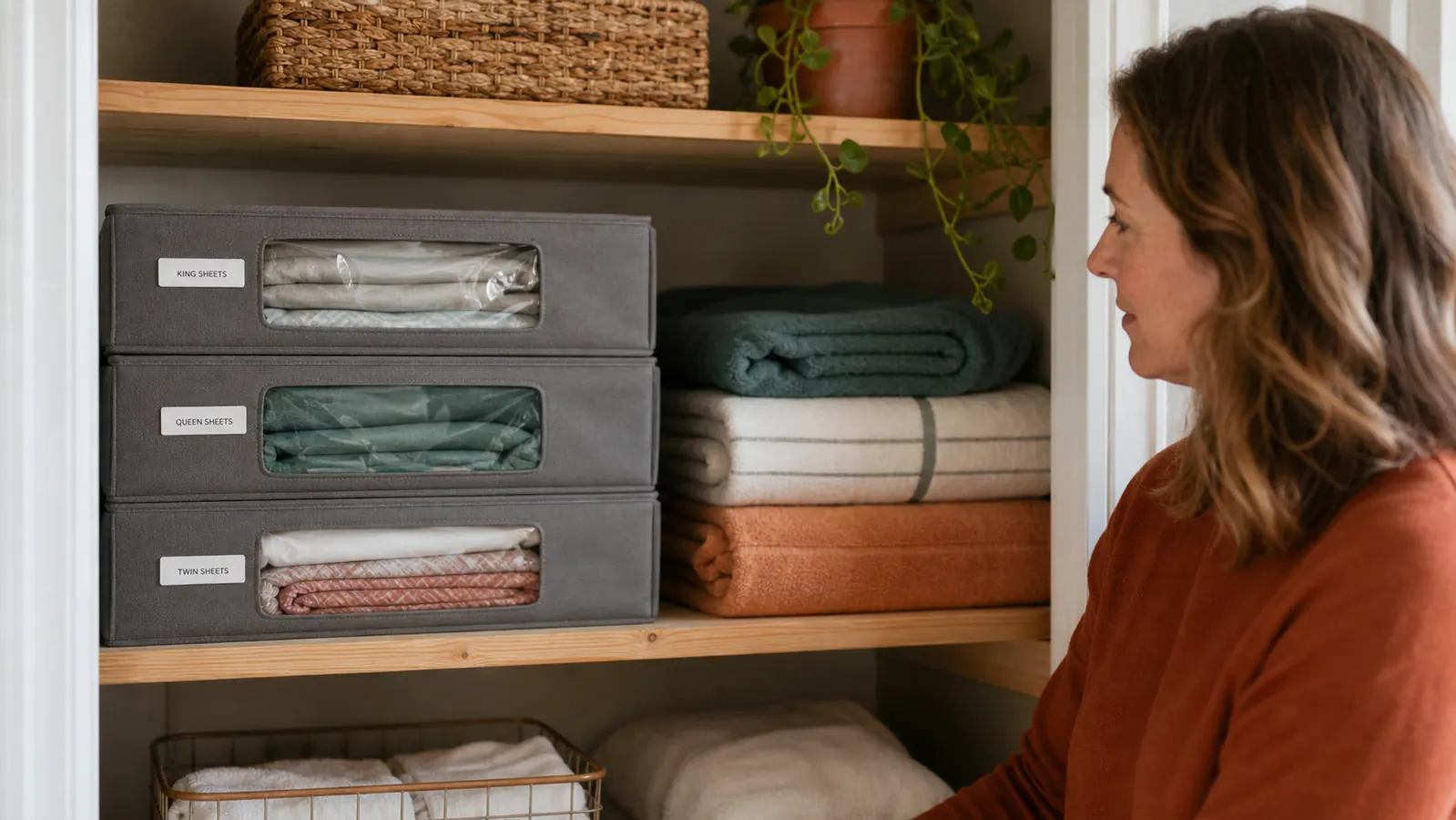
This is where the SpaceAid organizers earned their spot on my shelf. Each folded set slides into its own fabric organizer, and the clear window on the front means I can see the pattern or color without unzipping anything. I sorted mine by size, one organizer for our king set in the primary bedroom, one for queen, and two for the full and twin sets in the kids' rooms, so I'm never digging through a mixed pile trying to guess by feel which folded rectangle is which and hoping I picked the right one on the first try.
The organizers themselves collapse flat when they're empty, which matters if you're working with a smaller closet like mine and don't want bulky bins eating shelf space you don't have to spare. Loaded and zipped, each one sits upright on the shelf like a labeled box file, so I'm stacking flat rectangles instead of a leaning tower of loose sheets that topples every time someone grabs a towel from the shelf below, which used to happen at least twice a week in our house.
Label the outside if your organizer doesn't already have a clear window, or add a small tag even if it does, since the window shows you the fabric but not always the size at a glance, and two of our sets happen to be nearly the same shade of gray. I wrote 'Queen, Master' on a piece of painter's tape stuck to the top edge of ours for the first few weeks until I had the pattern memorized. Now I can grab the right one without even reading the tag, which is the whole point of this system.
Step 5: Build a five-minute monthly reset
Once a month, usually the first Sunday, I pull every organizer down and do a quick check. I confirm each set is still complete, refold anything that got shoved back in wrong after a rushed sheet change, and make sure nothing's slipped out of its bag and gone missing on the shelf behind it. This is the step that keeps the whole system from sliding back into the pile-and-hope method I used for years, which is exactly what happened the two other times I tried to organize this closet before I had an actual maintenance habit attached to it instead of just a one-time weekend project.
I also use this monthly check to notice when a set is getting thin or worn and needs replacing, instead of discovering a hole mid sheet change on laundry night, which has happened to me more than once and is never a fun surprise at ten o'clock. The whole reset takes less time than folding a single load of towels, and it's the habit that made this system actually stick instead of falling apart by the third week like every previous attempt at organizing this exact closet.
What Else Helps
A few small additions made the system stick for good in our house. I added a cheap adjustable shelf divider so the stack of organizers can't lean sideways every time someone grabs a towel from the shelf below, which used to knock the whole tower over at least once a week before I added it. I also stuck a small printed list inside the closet door showing which organizer belongs to which bed, so my husband and the kids can grab the right sheets without texting me a photo asking which one is queen, which was a genuinely regular occurrence before this system existed. And once I trimmed down to five complete sets instead of fourteen loose pieces, I stopped buying replacement sheets I didn't actually need, since I could finally see what we already owned at a glance instead of guessing and duplicating something already sitting on the shelf.
I'm not folding fewer sheets. I'm just not unfolding three wrong stacks anymore before I find the one I actually need.
Ready to see every sheet set at a glance instead of digging blind
This is the four-pack of organizers I've used every month since last fall, clear window front, collapsible when empty, and enough room for a full queen or king set folded flat. See today's price on Amazon.
Amazon Check Today's Price on Amazon →