

If you've ever stood at the counter at 6:15 in the morning, coffee mug in one hand, digging through a basket of loose K-cups trying to find the one flavor your husband will actually drink, you already know exactly why I sat down to write this guide. For almost two years, our coffee pods lived in a repurposed bread basket on top of the fridge in our kitchen outside Waco. Dark roast, decaf, hazelnut, and three sample packs from a Christmas gift box, all tangled together in one pile. Nobody in the house could find the flavor they wanted without pulling half the basket out onto the counter first.
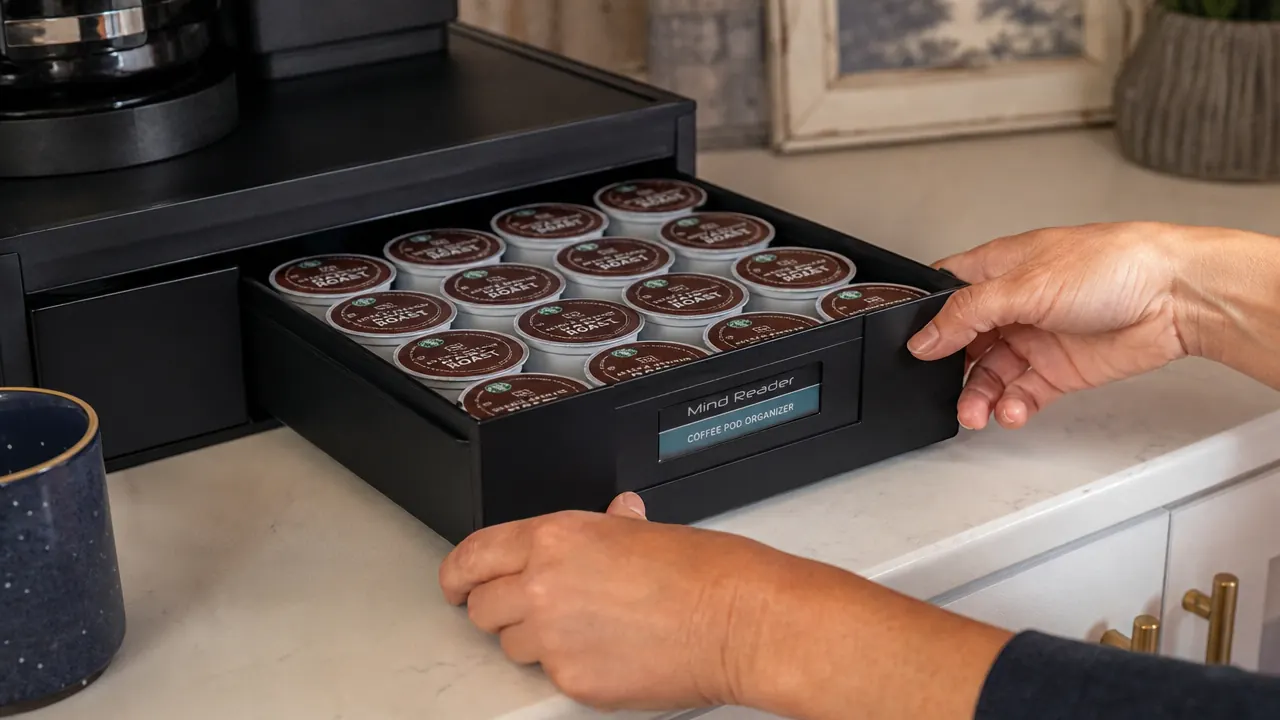
I'm not exaggerating when I say it cost us real money. My youngest knocked that basket clean off the fridge twice, and pods rolled under the stove where they sat collecting dust until I found them weeks later, expired and sticky at the bottom. So when I finally decided to fix our coffee station for good, I didn't want another loose bin. I wanted drawers, dividers, and a way to see at a glance how many dark roasts we had left before Saturday's grocery run. I ended up buying the Mind Reader coffee pod organizer, the 36-pod drawer version, and it took less than ten minutes to turn that mess into a system that actually works. Here's exactly how I set mine up, step by step, so yours goes just as smoothly.
Before You Buy Another Basket, Read This
If your coffee pods still live in a junk drawer, a shoebox, or a basket on top of the fridge, you don't need to fix your habits, you need a system built for pods. This organizer holds 36 pods across three drawers and sits flush on a normal counter. Check today's price before you grab another storage bin that won't actually solve the problem.
Amazon Check Today's Price on Amazon →Step 1: Pull Every Pod Out and Actually Count What You Have
Before any organizer touches your counter, empty every pod you own onto the kitchen table. I know this sounds backwards when the goal is less mess, but you cannot sort what you cannot see. I pulled pods out of a basket, a cabinet above the microwave, and a gallon bag stuffed in the pantry that I'd honestly forgotten about. Between all three spots we had 61 pods, more than double what I thought we owned.
While everything is out on the table, check expiration dates. K-cups don't spoil the way fresh food does, but coffee does go stale, and flavored pods lose their punch faster than plain dark roast. I tossed eleven pods that had been sitting since a work trip gift bag from over a year earlier. That single step alone freed up almost a third of a drawer before I'd even started organizing anything.
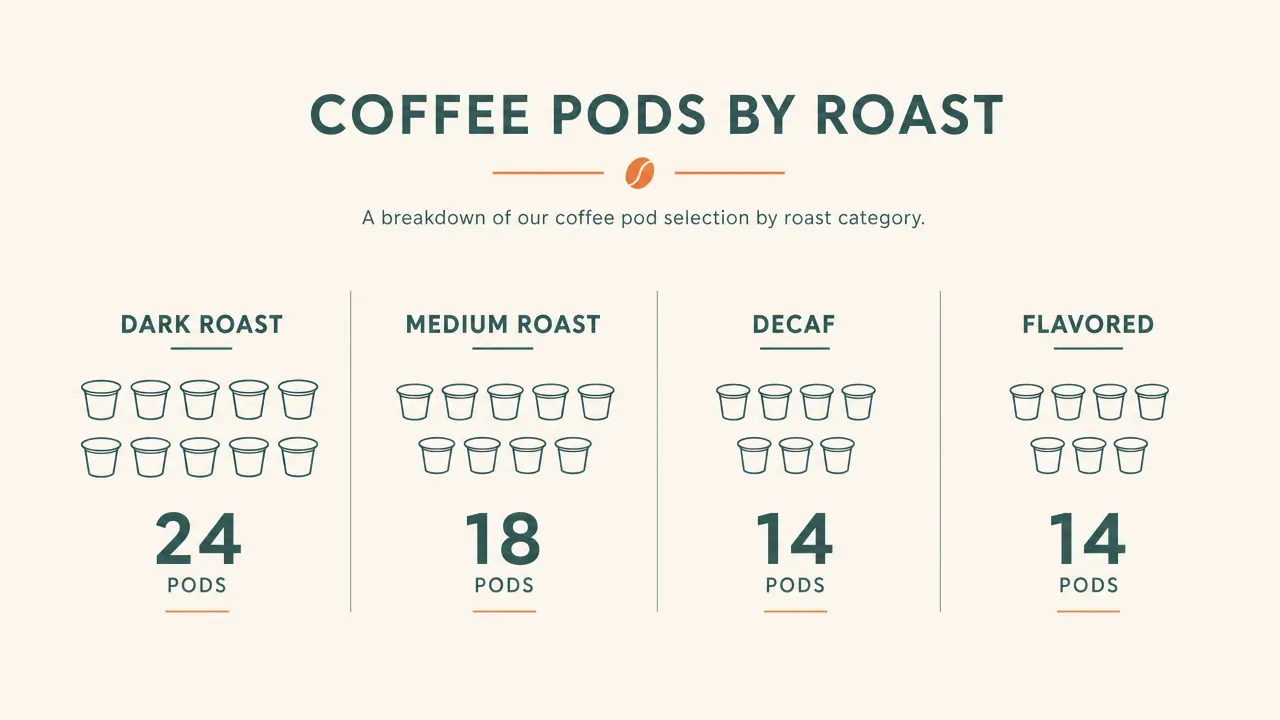
I also wrote everything down on a notepad as I sorted, just a quick tally by roast type. It only took about five minutes, but it gave me the exact numbers I needed to plan the drawers instead of guessing. Turns out we had eighteen dark roast, nine medium, six decaf, and the rest scattered flavored pods left over from gift boxes. Numbers like that are hard to picture until you actually count them, and counting is what kept me from buying an organizer too small for what our family goes through in two weeks.
Step 2: Sort by Roast, Not by Brand
This is where most people get it wrong, myself included the first time I tried something similar years ago with a cheaper wire basket. Sorting by brand feels natural, but nobody stands at the counter at six in the morning thinking about brand names. They're thinking dark roast, decaf, or something with flavor for the kids' hot chocolate pods. I grouped everything into four piles: bold or dark roast, medium, decaf, and flavored or specialty.
If your household is anything like mine, the decaf pile is small and the dark roast pile is enormous. That's useful information, because it tells you which drawer needs the most room. In our house, dark roast gets the front drawer since my husband grabs it first every single morning without fail, and decaf gets tucked in back since it's mostly for my mother-in-law when she visits.
I also asked everyone in the house what they'd grab first thing in the morning, since I was tired of guessing. My husband wanted dark roast, my teenager wanted the flavored vanilla pods for her hot chocolate mornings, and I mostly reach for medium roast unless I'm running on four hours of sleep, in which case it's whatever is strongest and closest. Knowing that ahead of time meant I wasn't rearranging drawers a week later once I figured out actual habits by trial and error.
Our coffee habits also shift with the seasons, which surprised me the first year I tracked it. Summer means more of the flavored pods we use for iced coffee and far less dark roast, since nobody wants a piping hot bold roast when it's already 95 degrees outside in July. I don't overhaul the whole system twice a year, but I do swap which pile gets the front-row spot in the Mind Reader drawer depending on what we're actually reaching for that month.
Step 3: Load the Drawers Front to Back, Not Stacked
The Mind Reader organizer has three separate pull-out drawers, and the instinct is to just dump the pods in and shut it. Don't. Stand each pod up on its base and load them front to back in rows, the same way you'd load a filing cabinet. It takes maybe ninety seconds longer than dumping them in loose, and it means you can see every single flavor without digging past the ones in front.
I put our everyday dark roast in the top drawer since it's at eye level and gets opened the most, medium roast in the middle, and decaf plus the flavored specialty pods in the bottom drawer since those get grabbed less often. Each drawer holds 12 pods comfortably, 36 total, which covers a little over two weeks for our house of four coffee drinkers.
One thing I didn't expect was how much easier it became to spot when a flavor was almost gone. With pods dumped in loose, a nearly empty basket still looked half full because everything shifted around and settled at the bottom. Standing them up in rows means an empty slot is obvious the second you open the Mind Reader drawer, which is honestly half the reason this system has stuck as long as it has for us.

Step 4: Set a Visual Restock Trigger
Here's the part nobody tells you about pod organizers: they only stay organized if you know when to restock. I picked a simple rule. When the front row of any drawer drops below three pods, that flavor goes on the grocery list that week, written right on the whiteboard stuck to our fridge. No app, no spreadsheet, just a quick glance when I'm topping off my coffee before the kids wake up.
This matters more than people think. Before the organizer, we'd run out of decaf on the exact morning my mother-in-law was visiting, or discover three unopened boxes of the same flavor because nobody could see what we already had stashed away. A drawer you can see into at a glance solves both problems without any extra effort on anyone's part.
I also started noticing patterns I never picked up on before, like how our dark roast supply drops twice as fast on weeks when my husband works from home instead of driving into the office. Little details like that used to be invisible when everything lived in one messy pile, but they're obvious now that the pods are sorted where I can actually track them week to week.
Step 5: Give the Organizer a Permanent Home, Not a Temporary One
Last step, and it's the one people skip. Don't just set the organizer wherever there's an open inch of counter that day. Pick a permanent spot next to your coffee maker, measure it before you buy anything, and commit to it. Ours sits directly to the left of the Keurig on a stretch of counter that used to hold junk mail and spare keys nobody ever put away.
The unit is about a foot wide, which fit that spot with room to spare once I moved the mail basket to a drawer. If your counter space is tighter, the drawers stack in a way that keeps the footprint small, closer to the size of a toaster than a full appliance. Measure your spot before it arrives so you're not scrambling to rearrange the whole counter the day the box shows up on your porch.
Before you settle on a spot, run your coffee maker for a few mornings and pay attention to your own motion, reaching for a mug, then a pod, then hitting brew. I moved ours twice before landing on the current spot, because the first location meant an extra step around the corner of the counter every single morning, which sounds small until you're doing it half asleep before 7 a.m.
I also showed everyone in the house exactly where the organizer lives and how it works, instead of just assuming they'd figure it out. My teenager restocks her own flavored pods from the pantry now without being asked, and my husband finally stopped leaving empty boxes in the cabinet since he knows exactly where the recycling bin sits relative to the counter. A system only keeps working if everyone who uses the coffee maker actually understands it, not just the person who set it up in the first place.
What Else Helps
A couple of small things made this system stick longer than any organizing project I've tried before. First, I keep a sticky note inside the pantry door listing which flavors live in which drawer, mostly for my husband, who still opens the wrong one out of habit some mornings. Second, I do a five-minute reset every Sunday while the coffee brews, restocking from the pantry stash and tossing anything that snuck past its date. It's a small habit, but it's the difference between an organizer that works for a month and one that keeps working for years.
I also stopped buying variety packs just because they were on sale. They sound like a good deal, but half the flavors in those boxes sat untouched in our drawers for months, taking up space that could've gone to the roast we actually drink daily. Now I buy the two or three flavors we go through consistently and skip the sampler boxes entirely, which keeps every drawer full of pods someone in the house will actually use before they go stale.
Finally, I keep an eye on how the drawers slide after months of daily use. A quick wipe-down with a damp cloth every couple of weeks keeps coffee grounds and stray sugar packets from building up in the corners, and it takes all of two minutes while I'm already wiping down the counter anyway. Small maintenance like that is the difference between an organizer that still looks new after a year and one that starts sticking and catching on itself.
The basket wasn't the problem. Not having a system for what went back into it was.
Ready to Stop Digging Through a Coffee Pod Basket?
If you've read this far, you already know the fix isn't another bin, it's a system built to hold and sort your pods for you. Ours has been on the counter for months now and it still looks and works the same as day one.
Amazon Check Today's Price on Amazon →